Bioavailability 101: Why How Much You Take Isn't the Whole Story
If you've spent time reading product labels, you've probably run into the word "bioavailability." It gets used a lot, but what does it actually mean, and why does it come up so often when people talk about tinctures, gummies, capsules, and topicals?
This guide breaks down the science in plain language, drawing on an overview published by the National Library of Medicine, so you can read labels with a sharper eye and ask better questions about the products you choose.
What is Bioavailability?
In scientific terms, bioavailability describes the rate and fraction of a substance that reaches the body's circulation after it's taken. According to a StatPearls review hosted by the National Center for Biotechnology Information (NCBI), bioavailability is typically expressed on a scale from 0 to 1, or as a percentage from 0% to 100%.
Picture pouring water through a coffee filter full of coffee grounds. Some makes it through to the pot, and some stays behind in the grounds. Bioavailability measures how much makes it to the pot.
When a compound enters the body, it doesn't all arrive intact. Along the way, some of it may not be absorbed, some may be broken down, and some may be bound up or cleared before it circulates. The portion that makes it through unchanged is what scientists mean when they talk about bioavailability.
Two key ideas are wrapped into the definition:
- Extent: how much of the substance ultimately reaches circulation.
- Rate: how quickly it gets there.
How Scientists Measure Bioavailability
Researchers measure bioavailability by tracking how much of a compound shows up in the blood over a period of time. They take repeated blood samples, plot the concentration on a graph, and calculate the "area under the curve," often shortened to AUC. The bigger the area, the more of the compound reached circulation overall.
To get a baseline, scientists compare that curve to a reference. The NCBI review explains that an intravenous (IV) route is used as the benchmark and is considered to have 100% bioavailability, because it places a substance directly into the bloodstream with no absorption step. Every other route is compared against that number.
This leads to two terms you may see in research:
- Absolute bioavailability compares a given route (like swallowing a capsule) to the IV benchmark.
- Relative bioavailability compares two non-IV forms to each other, such as one capsule formula versus another, or a capsule versus a liquid.
Why Bioavailability Matters
Bioavailability isn't a fixed number. Many factors can shift how much of a compound makes it into circulation, and the NCBI overview groups them into a few categories.
The route it takes into the body
The path a compound travels is one of the biggest variables. When you swallow something, it heads through the digestive tract, where it has to be absorbed through the intestinal wall. From there, much of it travels first to the liver before reaching the rest of the body.
That trip through the liver is called first-pass metabolism, and it's a central concept in bioavailability. The liver processes and breaks down many compounds before they have a chance to circulate, which can reduce the amount that remains. The NCBI review notes that first-pass metabolism can significantly lower the bioavailability of substances taken by mouth.
Other routes follow different paths. The review points out that the sublingual route, where something is held under the tongue, allows absorption through the tissue in the mouth and bypasses that first pass through the liver. Topical products applied to the skin take yet another route, generally working locally at the surface rather than traveling through the digestive system.
Solubility and formulation
Some compounds dissolve easily in water. Others dissolve much more readily in fats and oils. This matters because the body's absorption processes interact differently with each type.
Many plant-derived compounds are oil-soluble, which is one reason you'll often see them paired with a carrier oil like MCT or hemp seed oil. Formulators also experiment with different techniques, such as emulsions or water-compatible blends, in an effort to change how an ingredient disperses. Look for brands that are transparent about their methods and share third-party lab results.
What's already in your system
Food can change the picture. Whether you take something on an empty stomach or with a meal can influence how it's absorbed, and oil-soluble compounds in particular may interact differently when taken alongside dietary fats.
The NCBI review also highlights interactions with the body's own processing systems. A family of liver enzymes called cytochrome P450 is responsible for breaking down a wide range of substances. When something speeds up or slows down those enzymes, it can change how much of another compound remains available. Proteins in the blood, such as albumin, can also bind to certain compounds and affect how much is free to circulate.
This is a big reason why anyone taking medications should talk with a healthcare provider before adding any new supplement or wellness product to their routine.
Individual differences
No two bodies are exactly alike. The NCBI overview notes that genetic variations can affect the transporters and enzymes involved in absorption and processing. Differences in liver and kidney function, digestive health, and protein levels in the blood can all play a role too.
In practical terms, two people can use the same product the same way and have different experiences. That variability is normal, and it's one reason "start low and go slow" is common advice.
What This Means When You're Comparing Products
A few takeaways worth keeping in mind:
The number on the label is the starting point. A label tells you how much of an ingredient is in a serving. Bioavailability describes what happens after that. The amount listed and the amount your body actually uses are not always the same thing.
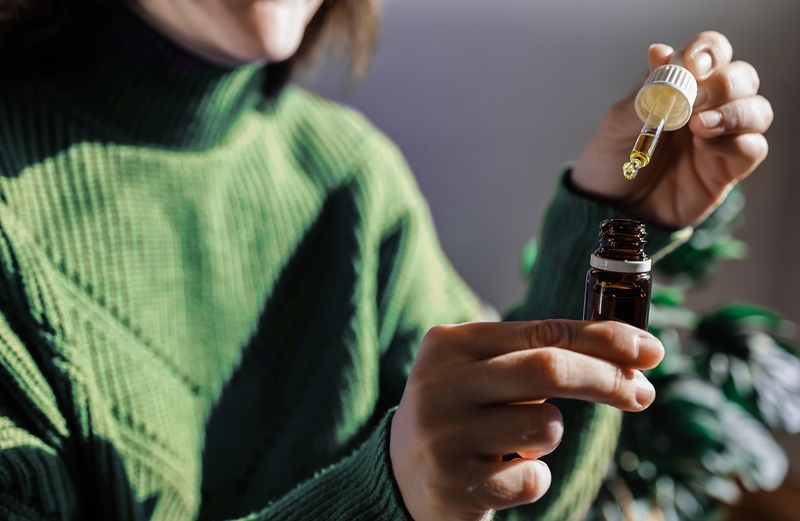
Format matters. Tinctures, gummies, capsules, and topicals each travel different routes. A gummy passes through digestion, a tincture held under the tongue has the chance for some absorption in the mouth, and a topical works at the skin's surface. None of these is automatically "better." They simply behave differently and fit different routines.
Be cautious of big claims. Bioavailability is a real and measurable concept, but it is sometimes used loosely in marketing. If a product promises a specific percentage or a dramatic increase, look for the research behind that figure. Reputable brands will point you to third-party testing and a Certificate of Analysis (COA) for every batch.
The Bottom Line re: Bioavailability
Bioavailability is the science of what happens between opening the bottle and a compound actually reaching your circulation. It's shaped by the route a product takes, how it's formulated, what else is in your system, and the unique makeup of your own body.
Knowing that format, timing, and individual differences all play a role can help you choose products more thoughtfully and set realistic expectations. If you have questions, our team is happy to walk you through the options. Contact customer service here.
As always, talk with your healthcare provider before starting any new wellness product, especially if you take medications or have questions about how something might fit into your routine. All of our products are intended for adults 21 and older.


CBD is generally well-tolerated by most adults and can be incorporated into a daily wellness routine. However, the right dosage varies based on factors like body weight, metabolism, and individual goals. Many users begin with a low dose (such as 10–20 mg per day) and adjust gradually until they find what works best.
For safety, always follow product labeling instructions and consult with a qualified healthcare professional—especially if you are pregnant, nursing, have a medical condition, or take prescription medications. Choosing third-party tested products ensures you know exactly what you’re taking.
Bioavailability refers to the percentage of a substance—such as a drug, supplement, or cannabinoid—that enters the bloodstream and is available for the body to use. It determines how effectively and quickly a compound takes effect.
For example, when cannabinoids are nano-infused, their bioavailability increases, meaning they absorb more efficiently and provide faster, stronger effects compared to traditional edibles. Different consumption methods (e.g., smoking, vaping, edibles, sublingual tinctures) impact bioavailability, with some delivering quicker and more potent results than others.