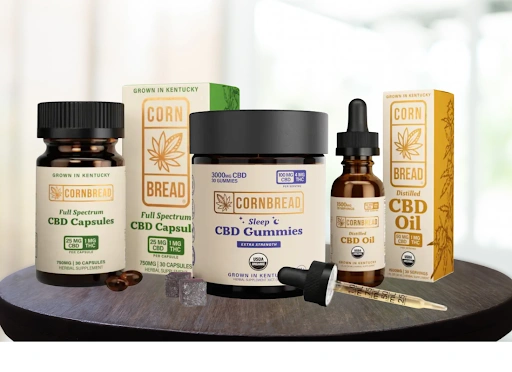
How Long Does CBD Take to Work? What to Expect
You just tried CBD for the first time. Maybe you dropped an oil under your tongue, popped a gummy, or rubbed some balm onto your skin. And now you're sitting there checking in over and over again on your own body like it's a delivery tracking page. Any minute now...
We get it. When you're new to CBD, the waiting is the hardest part. So let's settle the question once and for all: how long does CBD actually take to kick in, and what should you realistically expect once it does?
The short answer is: it depends on how you take it — anywhere from a few minutes to a couple of hours. But the real answer is more interesting than that, and understanding it will save you a lot of second-guessing (and probably some money, too, since "it's not working" is the #1 reason people give up on CBD before it's had a fair shot).
Let's break it all down — the science, the timelines, and the honest expectations — in plain English.
First, a quick refresher on how CBD even gets "in"
If you've read our CBD 101 guide, you already know that CBD (cannabidiol) is one of over 100 naturally occurring compounds found in the hemp plant, and it interacts with your body's endocannabinoid system, or ECS. Think of the ECS as your body's internal control panel — it's involved in regulating things like mood, sleep patterns, appetite, and how you perceive discomfort.
Here's the part that actually matters for today's topic: before CBD can talk to your ECS, it has to get into your bloodstream. And how it gets there — orally through your digestive system, sublingually through the tissue under your tongue, through your lungs, or just locally through your skin — is the single biggest factor in how fast you'll feel anything at all.
In pharmacology terms, this is called "bioavailability" (how much of the CBD actually makes it into circulation) and "onset time" (how long that takes). Researchers have studied this pretty extensively, and the findings are consistent: a 2023 pharmacology review published by the National Institutes of Health notes that CBD's onset of action through the oral route is typically delayed, generally falling somewhere between 30 minutes and 2 hours, while other routes work quite a bit faster. Let's go method by method.
CBD oils and tinctures (sublingual): the middle ground
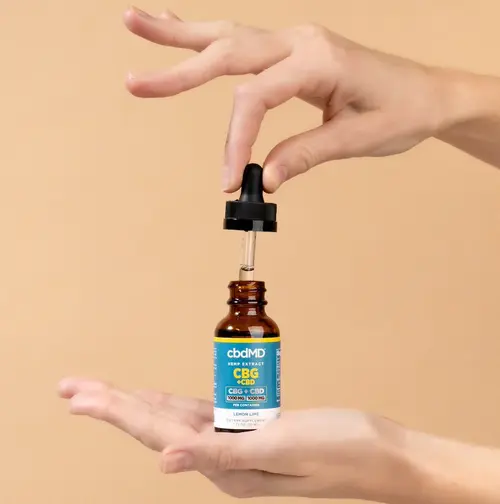
If you're using a CBD oil or tincture — the kind where you drop it under your tongue and hold it there — you're using what's called the sublingual method. The tissue under your tongue is thin and full of tiny blood vessels, which lets some of the CBD absorb directly into your bloodstream without a full trip through your digestive system.
Clinical research backs up what a lot of longtime CBD users will tell you anecdotally: sublingual products tend to act faster than something you swallow and digest. In a controlled phase I trial published in the British Journal of Clinical Pharmacology, a sublingual CBD wafer produced bioavailability comparable to an oil solution, with absorption happening through the oral mucosa rather than relying entirely on the digestive tract. A separate pharmacokinetic review in the journal Biomedicine & Pharmacotherapy similarly found detectable CBD in the bloodstream within about 30 minutes of taking an oil or sublingual wafer, with peak levels building over the following several hours.
Realistic expectation: many people report a sense of settling in within 15–45 minutes, though the fuller effect tends to build over the following hour or two. This lines up with what we outline in our CBD Oil Explained guide and our complete CBD Oil Dosage Guide — sublingual is one of the fastest non-inhaled options precisely because it skips a chunk of the digestive detour.
Gummies and capsules (oral/ingested): worth the wait
Gummies, capsules, and softgels are wildly popular — they're easy to dose, they're discreet, and there's no dropper math involved. But they take the scenic route through your body.
When you swallow a CBD product, it has to survive your stomach, get absorbed through your intestines, and pass through your liver before it enters general circulation. That liver step is called "first-pass metabolism," and it's a big reason ingested CBD takes longer and why less of it ultimately reaches your bloodstream. A population-based meta-analysis published on PubMed modeled data from 15 clinical studies and found time to peak concentration ranged from roughly 2 to nearly 5 hours depending on the exact oral formulation, with oral solutions being the slowest to absorb. A separate randomized crossover study of oral CBD capsules found peak concentration was reached at a median of around 2 hours for an enhanced capsule versus around 6 hours for a standard isolate capsule — a good reminder that not all capsules are formulated the same way.
Realistic expectation: most people notice something in the 45-minute to 2-hour range, and the effect tends to last longer than sublingual options once it arrives — which is part of the trade-off. If you're new to gummies, our CBD 101 guide has good starting-dose guidance for finding your baseline before you decide it's "not working."
Vaping and inhalation: the fast lane
Inhaled CBD is the quickest way to get it into your bloodstream, period. Your lungs have a massive surface area of thin tissue in direct contact with blood vessels, so cannabinoids absorb almost immediately — no digestion, no liver detour.
Realistic expectation: effects are typically felt within minutes. The trade-off is that inhaled effects also tend to fade faster than oral or sublingual methods, so it's less about a slow build and more about a quick, shorter-lived wave.
Topicals: local, not systemic
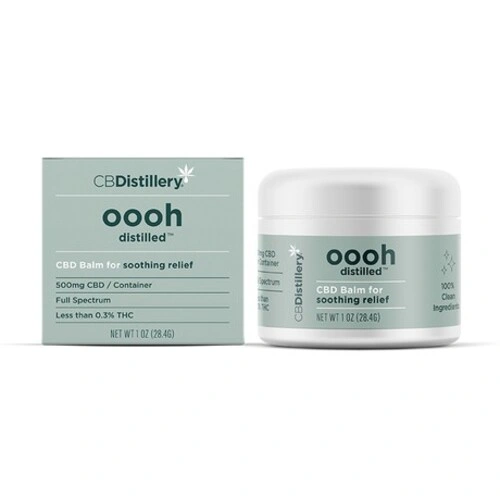
Topicals — balms, lotions, roll-ons — work differently from every other method on this list. They generally interact with receptors near the skin's surface rather than traveling through your bloodstream in meaningful amounts. That means the "how long does it take" question isn't really about circulation time; it's about how quickly the product absorbs into the skin and the tissue underneath it, which is typically within 15–30 minutes of application, depending on the formula and how much you use.
The variables that change your timeline
Here's where it gets personal — literally. Two people can take the exact same CBD gummy and feel timelines that differ by 30 minutes or more. That's not a defective product; it's just biology. A few of the biggest factors researchers point to:
Food in your stomach. This one surprises people. CBD is fat-soluble, so eating something — especially something with healthy fats — changes both how fast it acts and how much of it your body actually absorbs. A 2025 study in Scientific Reports found that a high-fat meal significantly changed both the bioavailability and the absorption pattern of CBD compared to a fasted state, and the NIH pharmacology review linked above similarly notes that taking oral CBD with high-fat food has been shown to enhance bioavailability compared to an empty stomach. The general pattern: an empty stomach tends to mean a faster (but sometimes less complete) onset, while food tends to mean a slower start but more total CBD absorbed.
Body composition and metabolism. Because CBD is fat-soluble, it can be taken up by fatty tissue, and individual differences in body composition, age, and metabolic rate all influence how quickly it shows up in your bloodstream and how long it sticks around.
Dose and formulation. Higher doses don't necessarily mean faster onset, but formulation absolutely matters. That same PMC capsule study found that different formulations of the same 40 mg CBD dose produced meaningfully different peak concentrations and absorption speeds — proof that "40mg is 40mg" isn't quite true once you factor in how a product is actually made.
Consistency of use. This is the one people skip past, and it might be the most important. CBD isn't like a one-and-done remedy you take for a single moment and forget about. Many people notice more stable, consistent results after a few weeks of regular use rather than from a single dose. Many longtime CBD users will tell you the same thing: the first time you try it might feel underwhelming, but the routine is where it shows up.
So what does "working" actually feel like?
This is the honest part nobody loves to hear: CBD isn't going to hit you over the head. It's not designed to. Most people describe the sense of it "working" as subtle — a feeling of settling, a bit more ease in the body, a quieter mental background — rather than a dramatic before-and-after. If you're expecting a light switch, you might miss it entirely.
A few tips that make it much easier to actually notice:
- Take it at a consistent time each day, so you can compare how you feel to your own baseline rather than guessing in the moment.
- Keep a simple log. Even three or four words per day — "calmer," "no different," "a little foggy" — turns a vague impression into a pattern you can actually see after a couple of weeks.
- Match the method to your goal. If you want something you can feel quickly for an in-the-moment need, sublingual is a better bet than a gummy. If you're building a daily wellness routine, the slower-building, longer-lasting oral options might suit you better.
- Give it real time before judging it. One gummy on a random Tuesday isn't a fair trial. Give any new routine at least a couple of weeks before deciding whether it's a fit.
- Start low and adjust slowly. Our CBD Oil Dosage Guide walks through exactly how to calculate a starting dose and step it up gradually, which helps you separate "this needs more time" from "this needs more milligrams."
A quick note on quality
None of the timing above matters much if the product itself is inconsistent. This is one of the areas where shopping with a brand that publishes third-party lab results actually pays off — it tells you what's really in the bottle, at what concentration, so your "dose" and your "timeline" are both working off accurate numbers instead of a guess. Our How To Read a COA guide covers exactly what to look for on a Certificate of Analysis if you want to go down that rabbit hole.
The bottom line
There's no single stopwatch answer to "how long does CBD take to work," because the honest answer depends on the method you choose, what's in your stomach, your own body chemistry, and how consistently you're using it. As a rough cheat sheet:
- Sublingual oils/tinctures: roughly 15–45 minutes to notice something, full effect building over 1–2 hours
- Gummies and capsules: roughly 45 minutes to 2 hours, sometimes longer with certain formulations
- Vaping/inhalation: minutes, but shorter-lived
- Topicals: roughly 15–30 minutes, localized rather than body-wide
If you're brand new to CBD, our CBD 101 guide is the best place to start before you pick a product — it'll help you match a method and starting dose to what you're actually hoping to get out of it. And if you've been using CBD for a while and still feel like the timing is a mystery, a quick log for two weeks will probably tell you more than any article (including this one) ever could.
Patience isn't the most exciting advice, but with CBD, it's genuinely the most useful.


Not dramatically, but you can nudge it. Taking a sublingual product on an emptier stomach, holding oil under your tongue for the full 30–60 seconds instead of swallowing it right away, and choosing a formulation designed for faster absorption can all shave time off the front end. Just know there's usually a trade-off between speed and total absorption.
A lot can shift between two uses of the "same" product — what you ate beforehand, how hydrated you are, how much sleep you got, even your stress level in the moment. This is normal and part of why a short log is so useful for spotting your own patterns instead of relying on memory.
Not necessarily. Some people feel a distinct shift, and others describe it as more of an absence — less noise, less edge — that's easy to miss if you're looking for something dramatic. If you genuinely notice nothing after a few weeks of consistent use at an appropriate dose, that's worth a conversation with your healthcare provider or our team, since it may mean the product, dose, or method isn't the right match for you.
Some regular users report needing to adjust their routine over time, but this varies a lot person to person and isn't something current research has mapped out precisely for CBD the way it has for some other compounds. If your usual dose stops feeling the way it used to, it's a good time to revisit your routine rather than simply increasing the amount.