CBD Oil Explained: What It Is, What the Research Says, & How to Choose a Brand You Can Trust
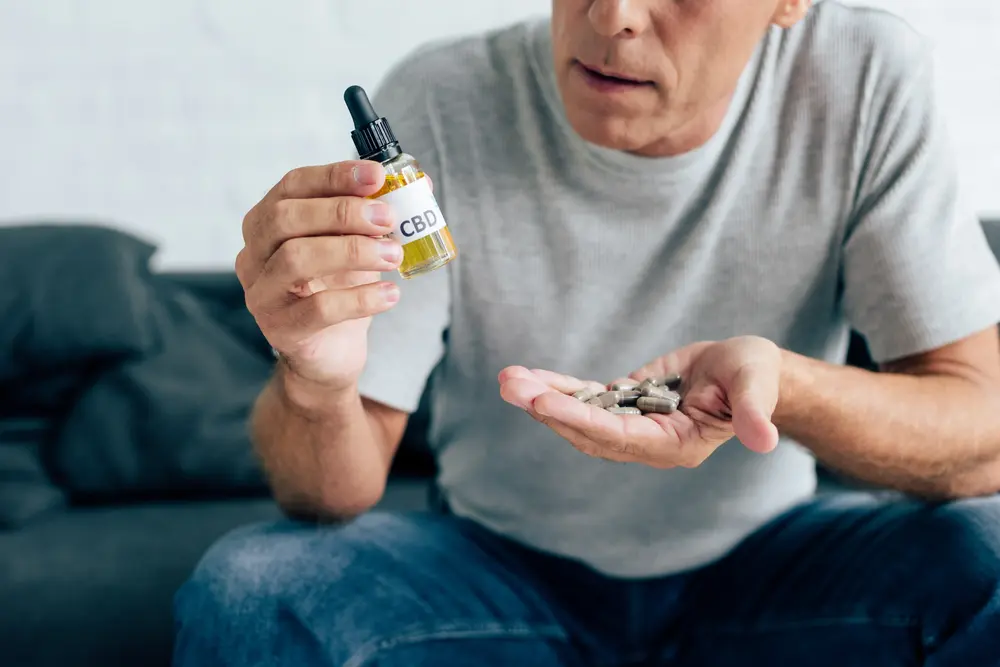
Walk into almost any wellness shop or grocery store and you'll find CBD oil somewhere on the shelf. This broad availability is a remarkable shift for a product that was barely a footnote in mainstream wellness a decade ago. Today, CBD oil, typically taken as a sublingual tincture, is one of the top CBD formats people reach for.
But for a category that's gone so mainstream so fast, there's still a lot of confusion about what CBD oil actually is, how it works, what the science genuinely supports, and how to tell a quality brand from a marketing-heavy imitator. This guide is meant to clear these questions up. We'll walk through what CBD oil is and how it's made, what recent peer-reviewed research suggests it can and cannot do, the practical differences between full-spectrum, broad-spectrum, and isolate formulas, and three brands we recommend with confidence.
What Is CBD Oil?
CBD oil is a liquid extract that combines cannabidiol, one of more than 100 cannabinoids naturally produced by the cannabis plant, with a carrier oil that helps your body absorb it. Cannabidiol was first isolated by chemist Roger Adams in 1940, but it sat in the scientific shadows for decades while THC and the psychoactive side of cannabis took the spotlight. Modern research interest didn't really pick up until the late 1980’s, when scientists began mapping the endocannabinoid system and realized CBD was doing important work without producing a high.
To make CBD oil (also referred to as cbd drops), manufacturers extract cannabinoids and other plant compounds from hemp, a variety of cannabis legally defined in the U.S. as containing 0.3% THC or less by dry weight, per the 2018 Farm Bill. The cleanest extraction method, and the one used by most reputable brands, is supercritical CO2 extraction, which uses pressurized carbon dioxide to pull cannabinoids and terpenes from the plant without leaving solvent residues behind. The resulting concentrate is then blended with a carrier oil, most commonly MCT (medium-chain triglyceride) oil derived from coconut—but sometimes hemp seed oil or olive oil—to create the finished tincture.
Two things to understand right away: first, CBD oil is non-intoxicating. Unlike THC, CBD does not produce a high, even at large doses. Second, CBD oil is not the same as hemp seed oil. Hemp seed oil is pressed from hemp seeds (which contain very little CBD) and is typically sold as a culinary or cosmetic ingredient. If a product is labeled "hemp seed oil" or simply "hemp extract" without listing milligrams of CBD on the label, it likely contains little to no actual cannabidiol.
How CBD Oil Works in the Body
The reason CBD has become such a focus of wellness research comes down to a system most people have never heard of: the endocannabinoid system, or ECS. Your ECS is a network of receptors and signaling molecules that helps regulate sleep, mood, appetite, immune function, inflammation, memory, and pain perception. Essentially, it’s the body's master regulator of balance.
Two receptors are central. CB1 receptors are concentrated in the brain and central nervous system; CB2 receptors are found mostly in immune tissues and peripheral nerves. Unlike THC, which binds directly and forcefully to CB1 receptors (which is why it produces a high), CBD works indirectly. It influences the ECS by slowing the breakdown of anandamide, sometimes called the "bliss molecule,” and by modulating receptors involved in pain and serotonin signaling, including TRPV1 and 5-HT1A.
In practice, this means CBD doesn't override your nervous system the way many pharmaceuticals do. It nudges your body's existing systems toward balance. That's why so many people describe CBD's effects as subtle rather than dramatic—fewer flare-ups, easier sleep, and a quieter background hum of stress.
Compared to other formats, including gummies, capsules, and topicals, tinctures work faster and are absorbed more readily by the body. In fact, tinctures are the king of bioavailability at up to 35%, compared to gummies and capsules, which generally fall between 4-20%. The oil format also allows you to easily customize your dose.
What Recent Research Tells Us
Scientific interest in CBD has exploded over the past decade, and while a lot of the most exciting claims still need bigger and longer trials, the evidence base is no longer thin. Here are some of the most credible findings.
The most clear-cut win is in epilepsy. In 2018, the FDA approved Epidiolex, a purified CBD oral solution, for two rare and severe forms of childhood epilepsy (Lennox-Gastaut and Dravet syndromes), and later for seizures associated with tuberous sclerosis complex. It's the only CBD-based medication currently approved by the FDA, and the trials that supported approval showed substantial reductions in seizure frequency.
CBD tinctures may be helpful for people with anxiety. A widely cited 2019 case series by Shannon and colleagues, published in The Permanente Journal, followed 72 adults at a psychiatric clinic and found that anxiety scores decreased within the first month for 79.2% of patients and remained decreased throughout the study. See our blog about The Best CBD for Anxiety for more information.
Sleep research is where CBD oil has become especially popular among consumers, and where the evidence is more mixed. The same Shannon case series found that 66.7% of patients reported improved sleep within the first month, though scores fluctuated over time.
For addressing chronic pain, a systematic review was published in 2023 that analyzed 15 studies among 1,516 identified articles. The majority of the studies indicated pain reduction ranging from 42% - 66% with CBD alone and CBD with THC. For more about CBD for chronic pain and inflammation, see our companion article here.
And for general safety, the World Health Organization published a 2018 critical review concluding that CBD has a good safety profile, no public health risk associated with abuse or dependence, and is generally well-tolerated.
None of this should be read as a cure-all promise. CBD is not a substitute for medical treatment, and most clinical researchers agree we need larger, longer, standardized trials to nail down dosing and define which conditions respond best. But, according to what we know so far, CBD use is promising for addressing several common concerns, with a remarkably clean safety profile.
Full-Spectrum, Broad-Spectrum, or Isolate?
When you start shopping for CBD oil, one of the first decisions you'll face is which type of extract to buy. The three main options each have a different use case.
Full-spectrum CBD oil contains CBD plus the full range of supporting cannabinoids (CBC, CBG, CBN, and others), terpenes, flavonoids, and the legal trace amount of THC (no more than 0.3%). Many users and researchers prefer full-spectrum for the so-called "entourage effect"—the theory that the supporting compounds enhance CBD's results. Something to keep in mind: with regular daily use at higher doses, the trace THC could potentially trigger a positive drug test.
Broad-spectrum CBD oil contains the same supporting cannabinoids and terpenes as full-spectrum, but the THC has been removed. This is a strong middle-ground choice for people who want the entourage effect without any THC concern.
CBD isolate is pure cannabidiol, usually 99%+ pure, with everything else stripped out. It's tasteless, odorless, and contains no THC. Isolate works well for people who are sensitive to other cannabinoids, who need to avoid THC entirely, or who want precise control over their dose.
If you're new to CBD, full-spectrum or broad-spectrum is generally the better starting point. Isolate is best understood as a specialty option.
How to Choose a Quality CBD Oil
The CBD market is famously uneven. Independent testing has repeatedly found products that contain less CBD than advertised, mislabel THC content, or include contaminants like heavy metals and pesticides. A few quality signals make a real difference.
Look for a current third-party Certificate of Analysis (COA), and make sure it covers cannabinoid potency, residual solvents, pesticides, heavy metals, and microbials. Reputable brands link to COAs directly from product pages, often via a QR code on the bottle. U.S. Hemp Authority certification, USDA Organic certification, and ISO-accredited lab testing are additional signals worth noting.
Additionally, you can look at sourcing. American-grown hemp from states with established programs (Colorado, Kentucky, Oregon, Vermont) is generally more tightly regulated than imported material. Look at carrier oils (MCT oil tends to absorb best), and check potency in milligrams of CBD per milliliter of liquid (not just total milligrams in the bottle), so you can compare products on equal footing.
For a curated selection of CBD oils and tinctures that meet these standards, The Green Dragon's CBD Oils & Tinctures collection is a good place to start. Our curated collection brings together the most-trusted national brands in a single, vetted catalog so you don't have to navigate an endless sea of manufacturers on your own.
3 CBD Oil Brands We Recommend
Charlotte's Web CBD
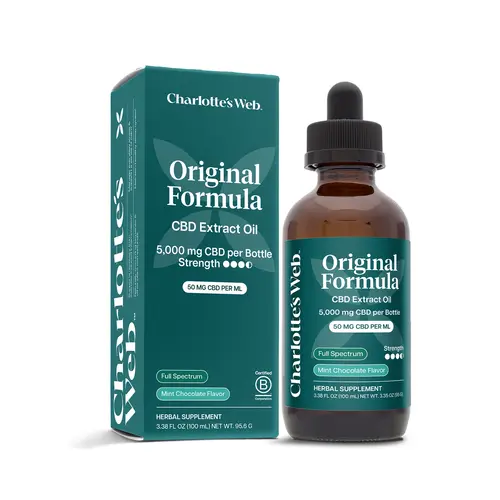
Charlotte's Web is the brand that, for many Americans, exemplifies CBD. The company traces its origin to the Stanley Brothers in Colorado and the now-famous strain developed for a young girl named Charlotte Figi who struggled with Dravet syndrome, and whose positive response to the formula helped transform public conversation about cannabidiol. More than a decade later, Charlotte's Web has matured into a publicly traded, highly transparent operator. Their tinctures use proprietary full-spectrum hemp genetics, are tested by ISO-accredited labs, and carry U.S. Hemp Authority certification, the industry's most rigorous third-party seal.
The Original Formula tincture (50 mg/mL) remains a benchmark in the category, but their lineup also includes lower-potency options for newcomers and CBD + CBN blends formulated specifically for sleep. If you want a brand with deep roots, transparent practices, and a track record longer than almost anyone else's in the category, Charlotte's Web is the easy choice.
Green Roads
Green Roads stands apart for its origin story: the brand was founded by a licensed compounding pharmacist, and that pharmacy-grade approach still shapes its formulations. Their CBD oils are broad-spectrum (THC removed) by default, which makes them a smart pick for people who want the entourage effect without any THC concern, especially professionals subject to drug testing or anyone with a low tolerance.
Green Roads publishes batch-level COAs, partners with ISO/IEC 17025-accredited labs, and offers a wide range of potencies (from 100 mg up to 3,500 mg per bottle) so you can dial in exactly the dose you need. The flavored options (Mint Breeze, Apple Kiwi Bliss) are also among the most palatable on the market—a small thing that matters when you're taking it daily.
CBDistillery
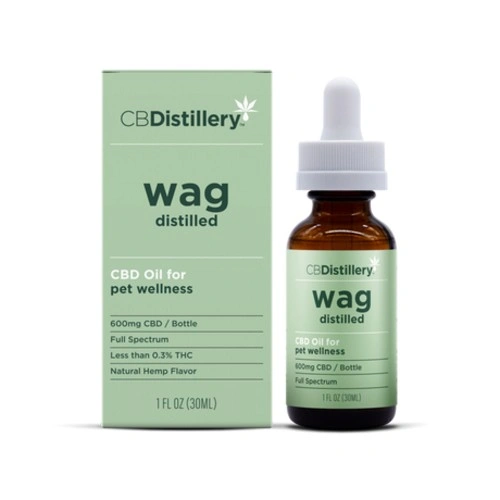
If quality and accessibility are equally important to you, CBDistillery is hard to beat. The brand has built a reputation for clean, third-party-tested, U.S. Hemp Authority–certified products at price points that consistently undercut the premium tier. They offer a complete range, including full-spectrum, broad-spectrum, and isolate tinctures, across multiple potencies, including a 2,500 mg full-spectrum option that's genuinely competitive with brands charging two to three times the price.
CBDistillery also operates on a non-GMO, pesticide-free Colorado supply chain and publishes detailed lab reports for every batch. For first-time buyers who want to try CBD oil without overcommitting financially, or for daily users looking to stretch their dose without sacrificing quality, this is the brand we recommend most often.
How to Take CBD Oil
If you're starting with CBD oil for the first time, keep it simple. Pick a brand from our collection based on your priorities: heritage and depth (Charlotte's Web), pharmacy-grade broad-spectrum precision (Green Roads), or value and accessibility (CBDistillery). Choose a moderate-potency tincture (somewhere in the 25 mg/mL range) so you have room to adjust up or down. Start with 0.5 mL once a day, hold it under your tongue for 30 to 60 seconds before swallowing, and give it at least two weeks of consistent use before fully judging the effect.
CBD oil isn't a miracle, and any source claiming otherwise is selling you something. But for a meaningful number of people, including a growing body of research participants, it offers something rare in the wellness market: a low-risk, well-tolerated tool that can take the edge off everyday stress, improve sleep, ease pain, and support the body's natural sense of balance.
Browse top CBD oil products at The Green Dragon CBD today, or check out our full CBD collection, which includes gummies, capsules, and topicals from leading brands. Still not sure which is right for you? Ask our friendly customer service team—we’re here to help!
-750mg-group.png)

CBD oil is made by extracting cannabidiol from the flowers and leaves of the hemp plant and blending it with a carrier oil. It contains a measured, labeled amount of CBD (in milligrams). Hemp seed oil is pressed from hemp seeds, contains essentially no CBD, and is sold as a culinary or skincare ingredient. If a product is sold as "hemp oil" without listing milligrams of CBD, it's almost certainly hemp seed oil.
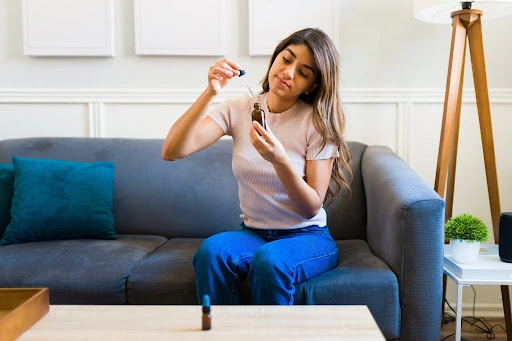
The most effective method is sublingual: place the dose under your tongue, hold it there for 30 to 60 seconds, then swallow. This allows the CBD to absorb directly into the bloodstream through the sublingual membrane, bypassing first-pass metabolism in the liver. Effects typically begin within 15 to 45 minutes. You can also add CBD oil to food or drink, but absorption is slower and less efficient.
No. CBD is non-intoxicating. Even full-spectrum products contain only the legal trace amount of THC (0.3% or less), which is not enough to produce a high at typical doses.