How to Choose the Right CBD Product for Your Routine
The "right" CBD product isn't a single bottle or gummy jar sitting on a shelf somewhere waiting for you to find it — it's whatever fits into your actual life. What works well for your neighbor might not be the best thing for you, and that's not because either of you is doing it wrong. It's because CBD isn't one-size-fits-all, and the research backs that up. A systematic review of human CBD trials published in the Journal of Clinical Medicine Research found huge variability in how people respond to CBD depending on dose, formulation, and individual factors like metabolism (PMC, 2019).
So instead of handing you a "top 10 CBD products" listicle, we want to walk you through how to actually think through this decision — the same way we'd talk you through it if you walked into our store or called us for a free consultation and asked us directly.
Start With Why You're Curious About CBD in the First Place
Before you even look at a single product, get honest with yourself about what you're hoping CBD might add to your day. There's no wrong answer here, but your "why" is going to steer almost every other decision you make.
For example, someone who's mainly interested in an evening wind-down routine is going to shop very differently than someone who wants something portable to use throughout a busy workday. And someone who wants to avoid any noticeable effect altogether (some people are sensitive to even hemp-derived compounds) is going to make different choices than someone who's comfortable exploring a broader range of the plant's compounds.
This is also where it helps to understand a little bit about timing. If you're expecting CBD to work like an ibuprofen — fast, obvious, over in a few hours — you might be setting yourself up for disappointment. Depending on how you take it, CBD can take anywhere from a few minutes to over an hour to feel, and for some people the more noticeable effects build gradually over days or weeks of consistent use. We actually broke this down in a lot more detail in How Long Does CBD Take to Work? What to Expect, which is worth a read if you're brand new to this.
Understand the Three Main "Types" of CBD
This is the part that trips up almost everyone at first, so let's slow down here. Nearly every CBD product falls into one of three categories, and the difference between them matters more than the difference between, say, two competing gummy brands.
Full-spectrum CBD contains CBD plus the full range of other compounds naturally found in the hemp plant — other cannabinoids, terpenes, and trace amounts of THC (federally, hemp-derived products must stay at or under 0.3% THC by dry weight). Some researchers and plenty of anecdotal reports point to what's called the "entourage effect," the idea that these compounds may work better together than any one of them would alone. A comparative pharmacokinetics study published in the European Journal of Drug Metabolism and Pharmacokinetics actually measured differences in how full-spectrum, broad-spectrum, and isolate CBD products behave in the body, which is a good reminder that these aren't just marketing categories — they show up in the data too (Springer, 2023).
Broad-spectrum CBD gives you that same mix of cannabinoids and terpenes, minus the THC (or with it reduced to a genuinely undetectable level, depending on the brand). This tends to be the sweet spot for people who want more than just isolated CBD but who need to avoid THC entirely — teachers, commercial drivers, parents who are drug-tested for work, or anyone who just doesn't want to take the risk.
CBD isolate is CBD and only CBD, with everything else stripped away. If you want the most straightforward, no-surprises option, or if you're extremely sensitive to other plant compounds, isolate is worth a look.
None of these is objectively "better." It genuinely depends on your circumstances, and if you're not sure which lane you fall into, that's a completely reasonable thing to ask about when you're shopping — including with us.
Think About Format the Way You'd Think About Any Daily Habit
Once you have a sense of the type of CBD you want, the next question is format, and we'd encourage you to think about this less like "which product is most popular" and more like "what am I actually going to use consistently."
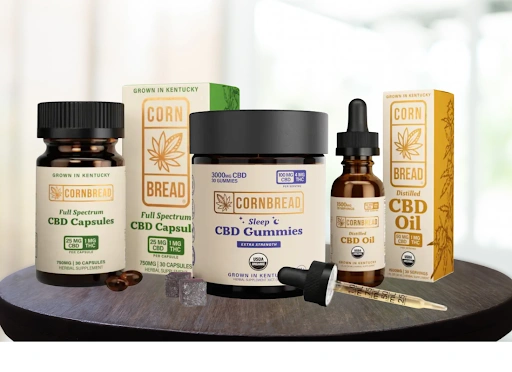
Tinctures and oils are taken sublingually (held under the tongue for 30 to 60 seconds before swallowing), which tends to get CBD into your system a bit faster than swallowing a gummy, since a portion absorbs directly through the tissue under your tongue rather than going through your entire digestive process first (Extract Labs bioavailability guide). Tinctures are also easy to dose precisely with a dropper, which is great if you like to fine-tune your amount over time. If that sounds like your speed, our CBD Oil Dosage Guide walks through exactly how to measure and adjust from there.
Gummies and capsules are the "set it and forget it" option — the dose is already measured out, there's no dropper to fuss with, and they're easy to toss in a bag or keep in a desk drawer. The tradeoff is that they take longer to kick in, since they have to move through your digestive system first.
Topicals — creams, balms, salves, roll-ons — are applied directly to the skin and are generally used for a specific spot rather than an overall daily routine. They're worth considering if your main interest is something you'd apply to a particular area rather than something you'd take internally.
And if you're newer to all of this and want a broader primer before you commit to a format, CBD 101: The Basics is a good place to start.
Don't Skip the Label — Seriously
We cannot stress this part enough, and it's the single biggest thing we wish more people paid attention to before they buy: check for a Certificate of Analysis, or COA.
A COA is a lab report from an independent, third-party testing facility that verifies what's actually in the product — both that the CBD content matches what's on the label and that the product is free of things like heavy metals, pesticides, and residual solvents. This isn't a "nice to have." Research has repeatedly found that a large share of CBD products on the market don't actually contain the amount of CBD listed on their packaging. A widely cited study out of Johns Hopkins found that nearly 1 in 4 CBD products tested contained less CBD than advertised, and some contained potentially unsafe levels of THC that weren't disclosed at all (Johns Hopkins Medicine, 2022). A more recent peer-reviewed review of labeling accuracy across CBD consumer products found similar ongoing gaps between what's on the label and what's actually in the bottle (ScienceDirect, 2025).
That's not meant to scare you off CBD altogether — it's meant to underline why buying from a shop that actually vets its brands, and from brands that make their COAs easy to find, matters so much. Any reputable seller should be able to hand you that lab report or point you to it without hesitation. If a brand can't or won't produce one, that's your answer right there.
Get Real About Dosage — And Expect to Adjust
There is no universal "correct" CBD dose. Body weight, metabolism, what you're hoping to get out of it, and the specific product you're using all factor in, and research on CBD dosing shows a wide range of effective amounts used across studies, with meaningful differences from person to person in how CBD is absorbed and processed (Karger, Medical Cannabis and Cannabinoids).
The approach we always recommend to customers is the same one you'll see in most credible resources: start low, go slow, and give it time. Begin with a modest amount, stick with it consistently for a week or two, and only increase gradually if you feel you need to — rather than jumping straight to a high dose on day one. We put together a full walkthrough of this in our CBD Oil Dosage Guide. (If you're exploring hemp-derived THC products alongside or instead of CBD, our THC Dosage Guide covers that side of things too — just note that THC product availability and rules vary by state and are 21+ only, so it's worth checking your local regulations.)
Keep a simple note on your phone of what you took, how much, and how you felt over the following days. It sounds tedious, but it's genuinely the fastest way to figure out your own sweet spot instead of guessing.
Consider Your Routine, Not Just the Product
Here's something that gets lost in a lot of CBD advice: the "right" product is as much about when and how you use it as what's actually in the bottle.
If your goal is a wind-down routine, consistency matters more than any single dose — many people find that using a product around the same time each evening, paired with their other wind-down habits, works better than sporadic use whenever they remember. If you're hoping to build CBD into your morning routine instead, a fast-absorbing tincture or a beverage-style product might fit more naturally than something that takes an hour to kick in.
And if you're curious about other cannabinoids that show up alongside CBD, it's worth knowing they're not all interchangeable either. CBN, for instance, has developed a reputation as "the sleepy cannabinoid" and works differently than CBD on its own — we go into that in What Is CBN? All About 'the Sleepy Cannabinoid' if you want to explore whether a CBD/CBN combination product might suit your routine better than CBD alone.
A Few Practical Red Flags to Watch For
While you're comparing products, a few things should make you pause:
Vague or missing lab results are the biggest one — if you can't find a current COA from an independent lab, move on. Wildly cheap pricing relative to competitors can also be a sign that a product is under-dosed or poorly made; CBD extraction and testing cost real money, and prices that seem too good to be true sometimes are. And be wary of any product or seller making big medical claims — phrases like "cures anxiety" or "treats chronic pain" are a red flag, not a selling point, since no CBD product is currently approved to make those claims. A trustworthy brand will talk about what people commonly use a product for, without promising a guaranteed medical outcome.
Bringing It All Together
If you remember nothing else from this post, remember this: figure out your "why," pick a spectrum type that matches your lifestyle and any THC concerns, choose a format you'll actually stick with, check the lab results before you buy, and start with a modest dose you can adjust from there. That's really the whole framework.
And if you land on our page still unsure, that's genuinely what we're here for. Come ask us questions, tell us what you're hoping to get out of it, and let's figure out together what actually fits your routine — not just what's trending this month.


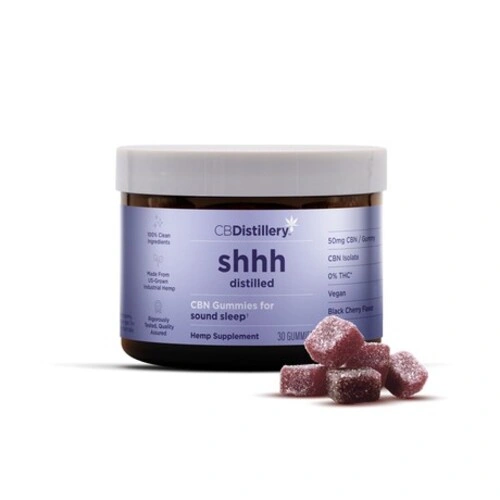

Full-spectrum contains CBD plus the full range of other compounds naturally found in hemp, including trace THC (federally capped at 0.3% by dry weight). Broad-spectrum gives you that same mix of cannabinoids and terpenes with the THC removed or brought down to an undetectable level, and isolate is CBD on its own with everything else stripped away. None of the three is objectively "better" — it comes down to whether you want to avoid THC entirely, want the broader plant compounds, or want the simplest, most straightforward option.
Ask for a Certificate of Analysis, or COA — a lab report from an independent testing facility confirming what's actually in the product and that it's free of things like heavy metals, pesticides, and residual solvents. Any reputable seller should be able to produce one without hesitation; if a brand can't or won't, that's worth treating as a dealbreaker. It's also worth being cautious of pricing that seems unusually low compared to similar products, since real testing and extraction cost money.