Best CBD for Pain and Inflammation 2026
Best CBD for Pain: What the Research Says & How to Choose the Right Format
Chronic pain is one of the most common reasons people reach for CBD. Whether it's a stiff lower back after a long week, arthritic knees that flare up in cold weather, or nerve pain that refuses to quit, more and more people are looking beyond the medicine cabinet for natural relief. And the numbers back that up: according to a 2025 Forbes Health/OnePoll survey, roughly 60% of U.S. adults have tried CBD, and pain relief consistently tops the list of reasons they use it.
But "CBD for pain" is not one-size-fits-all. The difference between rubbing a topical CBD cream onto a sore shoulder and taking a high-potency tincture under the tongue is significant—both in how the cannabinoid travels through your body and in what kind of pain each format is best suited to address.
In this guide, we'll break down how CBD actually works on pain, what recent research tells us about its effectiveness, and how to decide between topical and systemic formats (like gummies, capsules, and tinctures). We'll also spotlight three trusted brands: Charlotte's Web, Lazarus Naturals, and Cornbread Hemp, whose products reflect the best of what the current CBD market has to offer. Let’s get started.
How CBD Works on Pain
To understand why CBD has become a go-to for pain management, it helps to know a little bit about the endocannabinoid system (ECS). The ECS is a sprawling network of receptors and signaling molecules that your body uses to maintain balance across nearly every major system including mood, sleep, appetite, immune response, and, crucially, pain perception.
Two receptors matter most here: CB1, which is concentrated in the central nervous system and brain, and CB2, which is densely populated in immune tissues and peripheral nerves. Unlike THC, CBD does not bind strongly to either receptor. Instead, it works indirectly: it inhibits the enzyme FAAH (fatty acid amide hydrolase), which breaks down anandamide, one of your body's own natural pain-modulating compounds. By slowing that breakdown, CBD effectively boosts your built-in pain-relief signaling.
CBD also interacts with TRPV1 receptors, sometimes called "capsaicin receptors,” which are heavily involved in inflammatory pain and heat sensation. And it modulates serotonin receptors (5-HT1A), which helps explain why CBD can take the edge off both physical discomfort and the anxiety and sleep disruption that so often travel with chronic pain.
In plain English: CBD doesn't blunt pain the way an opioid does. It works more like a dimmer switch, quieting the body's inflammatory and pain-signaling pathways while supporting the systems that help you recover.
What Recent CBD Research Tells Us
The scientific literature on CBD and pain has grown rapidly over the past five years. Here are some findings worth knowing:
CBD may improve quality of life for those with chronic pain
A study published in Postgraduate Medicine in 2019 followed 97 chronic pain patients using CBD products. After eight weeks, almost all CBD users (94% reported quality of life improvements. Significantly, many (53%) were able to reduce or eliminate their use of other pain medications, including opioids.
May help reduce sensations like sharp pain and itch
A 2020 randomized, placebo-controlled trial published in Current Pharmaceutical Biotechnology tested topical CBD on patients with symptomatic peripheral neuropathy. Participants using 250 mg/3 fluid ounce CBD oil reported a statistically significant reduction in intense pain, sharp pain, cold, and itchy sensations compared to placebo.
Arthritis patients may benefit from CBD use
The Arthritis Foundation surveyed 2,600 arthritis patients in 2019 and found that 79% had either used CBD or were considering it. 94% of respondents said the primary reason for CBD use is to relieve pain; and among current users, over 30% said CBD helps provide relief from morning stiffness and helps get them moving.
CBD may change your relationship to pain
And in 2023, researchers at Syracuse University published a placebo-controlled trial in the journal Experimental and Clinical Psychopharmacology showing that CBD did not necessarily reduce pain intensity itself, but it significantly reduced how unpleasant the pain felt to participants. That's an important nuance: CBD may not always "turn down the volume" of pain, but it can change how you perceive it.
None of this is to say CBD is a miracle cure. Most researchers agree we still need longer standardized trials. But the trend is clear: CBD is showing real, measurable benefits for many people with chronic pain, and the safety profile is remarkably clean, with most reported side effects being mild (dry mouth, drowsiness, changes in appetite).
Topical vs. Systemic CBD: the Best CBD Type for Pain
Once you've decided to try CBD for pain, the next question is: how do you want to take it? Broadly, CBD products fall into two categories.
Topical CBD refers to creams, salves, balms, roll-ons, and patches applied directly to the skin. The cannabinoid is absorbed locally, interacting with CB2 receptors in the skin, muscles, and joints near the application site. Topicals generally do not enter the bloodstream in meaningful amounts, which is why they won't give you a "whole-body" feeling and are very unlikely to show up on a drug test (though this depends on the formulation—broad-spectrum and isolate topicals are safer bets than full-spectrum for that concern).
Systemic CBD refers to formats that deliver CBD into the bloodstream, including tinctures taken sublingually (under the tongue), softgels, gummies, and vapes. These products affect the entire body. Sublingual tinctures are usually the fastest-acting of the non-inhaled systemic options, with effects often felt within 15 to 45 minutes. Edibles and capsules take longer (often 45 minutes to two hours) but tend to last longer as well.
Here's what to consider when choosing a format:
Topical CBD tends to be the better choice for pain that's localized and musculoskeletal or inflammatory in nature, such as a strained shoulder after a tough workout, arthritic hands, a sore knee, tennis elbow, or neck tension from too much screen time. You know where it hurts, and you can put the product there. Onset is usually quick (15 to 30 minutes), and the effect is targeted where you need it most.
Systemic CBD is the stronger fit for pain that is widespread, neuropathic, or tangled up with other issues like poor sleep, anxiety, or stress. Fibromyalgia, sciatica, post-surgical recovery, migraines, and arthritis that affects multiple joints often respond better to an internal dose that can reach every corner of the body.
Many people get the best results by combining the two: a daily tincture for baseline, whole-body support and a topical cream or gel on hand for flare-ups and targeted relief. They work through different mechanisms and don't interfere with each other.
A quick note on dosing. Topical products are essentially self-limiting, meaning you apply until the area is covered and reapply as needed. Systemic CBD requires a little more thought. A common starting range is 20 to 40 milligrams per day, adjusted upward over one to two weeks based on how you feel. Some people with significant chronic pain do best at 50 to 100+ milligrams per day, often split into two doses. As always, talk to your doctor before starting something new, especially if you take prescription medications. CBD can interact with drugs metabolized by the liver's CYP450 enzymes, including some blood thinners.
The Best CBD for Pain: Products Worth Knowing
The CBD market is noisy, and quality varies wildly. Here are three brands we trust—one for each category of pain relief you're likely to want covered: a daily systemic capsule, a hands-on topical for targeted work, and a fast-acting sublingual tincture for whole-body support.
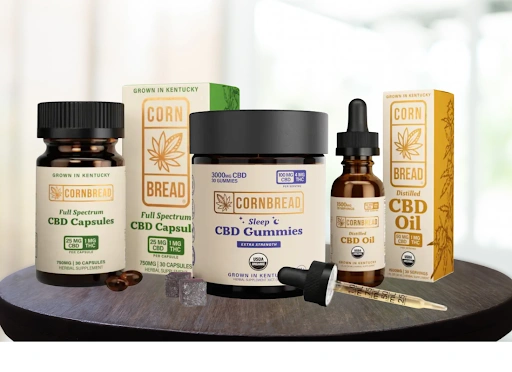
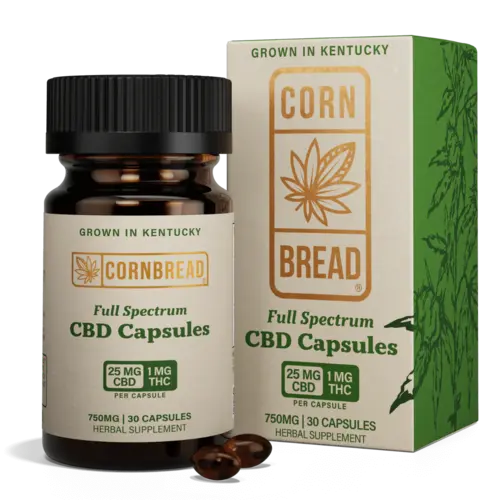
Cornbread Hemp Full Spectrum CBD Capsules — 750 mg
For systemic, whole-body relief that fits into a daily routine, it's hard to beat a capsule. Cornbread Hemp's Full Spectrum CBD Capsules deliver 25 mg of CBD per softgel from USDA Certified Organic, flower-only Kentucky hemp, meaning the cannabinoid and terpene profile is richer, drop for drop, than products that bulk up with stalks and leaves. Because they're full-spectrum, you also get the supporting cannabinoids (including the legal 0.3% THC) that researchers associate with the "entourage effect," which tends to boost results for both pain and sleep.
Capsules take a little longer to kick in than a sublingual tincture (typically 45 minutes to two hours), but the effects last longer too, making this a strong fit for people managing arthritis, persistent back pain, or recovery from workouts and long days on your feet. No measuring, no flavor, no fuss: take one in the morning, take one before bed, and let the baseline build.
Lazarus Naturals Fragrance-Free CBD Massage Oil, Full Spectrum
For targeted, hands-on relief, Lazarus Naturals' CBD Massage Oil is the kind of topical that earns a permanent spot on your nightstand. It's full-spectrum, fragrance-free (a real plus for people with sensitive skin or shared spaces), and built on a slick, slow-glide carrier oil base that makes it ideal for self-massage on tight shoulders, sore lower backs, stiff hips, and arthritic knees; or for the partner who's willing to help you work out the knots.
Because it's a proper massage oil rather than a cream or balm, you get longer working time and better coverage, which matters when you're trying to address larger areas or layered muscle tension. As with all Lazarus products, every batch is third-party tested.
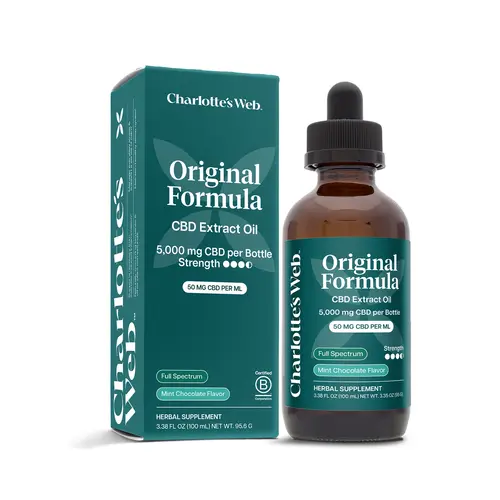
Charlotte's Web Original Formula CBD Oil — 50 mg/mL
When you want fast-acting, whole-body support, a sublingual tincture is still the gold standard, and Charlotte's Web's Original Formula is the tincture that arguably built the modern CBD industry. This is the same hemp genetics the Stanley Brothers first developed in Colorado, formulated at a serious 50 mg of full-spectrum hemp extract per milliliter. The formula gained widespread attention when it was featured in Dr. Sanjay Gupta’s CNN documentary Weed. Held under the tongue for 30 to 60 seconds, it absorbs through the sublingual membrane and typically begins working within 15 to 45 minutes, which is exactly the response curve you want when pain is interfering with your day or your sleep.
The full-spectrum profile delivers CBD alongside CBC, CBG, terpenes, and trace THC for entourage support, and Charlotte's Web's transparency standards (third-party testing, U.S. Hemp Authority certification, batch-level COAs) remain a benchmark for the category. Start with 0.5 mL (25 mg) once a day, adjust over two weeks, and consider splitting your dose morning and evening if pain is a round-the-clock issue.
Putting It Together
CBD isn't going to erase chronic pain overnight, and anyone promising that is selling you something. But the research, the clinical experience, and the testimonials from millions of users point to the same conclusion: for a meaningful number of people, CBD in the right format, at the right dose, can take the sharp edges off pain, restore sleep, and return some of the function and quality of life that pain has quietly stolen.
That's a lot for a plant extract to offer. And it's why, even as the CBD market matures, the conversation about pain keeps coming back to the same simple question: have you tried it yet? Explore our collection of CBD top brands and products at The Green Dragon CBD and get started today.

It depends on the format. Topicals typically begin working within 15 to 30 minutes, with the relief concentrated where you applied it. Sublingual tinctures (held under the tongue for 30 to 60 seconds) usually kick in within 15 to 45 minutes. Capsules and edibles take longer, often 45 minutes to two hours, because they have to pass through digestion, but the effects also tend to last longer. For chronic pain, give any systemic format at least two weeks of consistent daily use before deciding whether it's working; CBD often works by building a steady baseline.
Yes. In fact, many people get the best results by combining them. They work through different mechanisms: a topical interacts with CB2 receptors in your skin, muscles, and joints near the application site, while a tincture or capsule delivers CBD into the bloodstream for whole-body effects. Using both lets you build a steady systemic baseline while still having targeted relief on hand for flare-ups.
Yes, this is worth taking seriously. CBD is metabolized by the same liver enzymes that break down many common prescriptions, including blood thinners, certain seizure medications, some antidepressants, and statins. The interaction can either raise or lower the effective levels of those drugs. If you take prescription medication, especially anything with a "grapefruit warning,” talk to a medical professional before starting CBD.