


CBG: The "Mother Cannabinoid" Everyone Is Talking About
For the past several years, CBD has dominated the conversation around hemp-derived wellness. But a quieter shift has been underway in research labs, dispensary shelves, and online catalogs: a minor cannabinoid called CBG (cannabigerol) has been moving steadily into the spotlight. Until recently, CBG was difficult to extract in meaningful quantities and largely overlooked in favor of its more famous chemical descendants. Today, thanks to specialized hemp genetics and increasing research interest, CBG-infused tinctures, gummies, and recovery products are available from many of the most trusted brands in the industry—and a landmark 2024 human clinical trial has finally provided peer-reviewed evidence that CBG produces real, measurable effects in people.
This guide will give you a complete, research-grounded introduction to CBG: what it actually is, how it differs from CBD, what the science says about its potential benefits, how to incorporate it into your wellness routine, and three of the best CBG products you can add into your wellness routine right now.
What Is CBG?

CBG, or cannabigerol, is a non-psychoactive cannabinoid found naturally in the cannabis plant. It's often called the "mother cannabinoid" or the "stem cell cannabinoid" for one fascinating reason: every other major cannabinoid the plant produces, including CBD, THC, and CBC, originally starts as CBG.
Here's how that works biologically. As the cannabis plant grows, it produces an acidic precursor compound called CBGA (cannabigerolic acid). Enzymes in the plant then convert CBGA into the acidic forms of THC, CBD, and CBC. By the time the plant matures and is ready for harvest, most of the CBGA has already been transformed, which is why mature hemp flower typically contains less than 1% CBG.
That scarcity is why CBG products have historically been more expensive and harder to find than CBD. To produce a usable amount of CBG, growers either need to harvest hemp very early in its life cycle (before the conversion happens) or use specially bred high-CBG genetics. Today, both approaches are commercially viable, and CBG availability has expanded dramatically as a result.
The most important thing to know up front: CBG is non-intoxicating. Like CBD, it won't get you high, even at large doses. It's federally legal in the U.S. when derived from hemp containing less than 0.3% THC by dry weight, per the 2018 Farm Bill.
The Science: How CBG Works in the Body
CBG, like every cannabinoid, interacts with the body's endocannabinoid system (ECS)—the network of receptors and signaling molecules that helps regulate sleep, mood, immune function, inflammation, pain perception, and appetite.
CBG is a potent inhibitor of anandamide, which is sometimes called the “bliss molecule.” CBG prevents metabolism of anandamide, causing its levels to rise. Elevated levels typically have a positive effect on mood, pain, and stress. CBG is considered a “competitive” inhibitor of anandamide, meaning it binds directly to the substrate’s active site. This differs from cannabinoids like THC, D8 THC, CBD, and CBN, which are noncompetitive inhibitors, meaning they bind to a different enzymatic site.
CBG does work similarly to CBD in that it binds weakly to CB1R and CB2R receptors, antagonizes 5-Ht1A receptors, activates alpha (2) adrenoceptors, and modulates endocannabinoid signaling. The result of this weak binding? Subtle pain relief, increased calm, and lessened inflammation, without the effects like heavy sedation or intoxication associated with a stronger agonist.
The short version: CBG appears to be doing meaningful pharmacological work in the body, and through somewhat different pathways than CBD. That's part of why so many brands now formulate CBD + CBG products—the two cannabinoids may work synergistically rather than redundantly.
CBG vs. CBD: What's the Difference?
If you already use CBD, the most natural question is whether CBG actually offers something different. Here's how the two compare.
Both are non-psychoactive. Neither CBG nor CBD will produce a high.
They interact with the endocannabinoid system differently. CBG binds directly (but weakly) to CB1 and CB2 receptors. CBD works largely indirectly, modulating the ECS through other pathways. This means the two cannabinoids may produce overlapping but distinct effects.
CBD has far more research behind it. CBD has been studied in hundreds of human clinical trials. CBG has been studied in dozens of preclinical models but, until 2024, no rigorous placebo-controlled human trial had been published. The evidence base is catching up but still lags behind CBD.
CBG is rarer and historically more expensive. Because mature hemp plants contain very little CBG, the cannabinoid has been harder to extract at scale. Specialized high-CBG hemp genetics have improved availability, but CBG products still tend to cost a bit more than comparable CBD products.
They're often used for somewhat different purposes. Anecdotal and early research evidence suggests CBG users often reach for it for daytime focus, energy, anxiety reduction, anti-inflammatory support, and gut health, while CBD remains the go-to for general wellness, sleep, anxiety, and pain.
They work well together. Many of the most popular CBG products today actually combine CBG with CBD, banking on the "entourage effect,” the theory that cannabinoids and terpenes work better in combination than they do in isolation.
What Research Tells Us About CBG
The CBG evidence base is still emerging, but several findings are worth knowing.
The most important development is the first rigorous human clinical trial of CBG, published in July 2024 in Scientific Reports (a Nature journal) by Cuttler and colleagues at Washington State University. This double-blind, placebo-controlled, crossover field trial tested 20 mg of hemp-derived CBG against placebo in 34 healthy adults. The findings: CBG significantly reduced subjective feelings of anxiety at 20, 45, and 60 minutes after ingestion compared to placebo. Stress ratings also dropped meaningfully. An unexpected secondary finding was a clear improvement in memory—participants were able to recall more words from a memorized list after taking CBG than after taking placebo. And critically, CBG produced these effects without the cognitive or motor impairments associated with THC. This was the first peer-reviewed, placebo-controlled human evidence that CBG produces measurable anxiety and stress reduction.
Earlier preclinical research helped set the stage. A 2018 study published in the International Journal of Molecular Sciences suggested that CBG shows neuroprotective effects, increases cell viability, and decreases neuronal cell loss.
A 2022 review published in the International Journal of Molecular Sciences synthesized the pharmacological literature and concluded that CBG demonstrates anti-inflammatory, neuroprotective, analgesic, and antibacterial properties across a wide range of preclinical models, with a safety profile comparable to CBD. According to the review, “CBD seems to be a very promising compound to be used in the treatment of diseases that require multidirectional pharmacotherapy.”
The honest bottom line: CBG is well-supported by preclinical research, has its first solid human trial behind it, and is moving toward the kind of evidence base that CBD already has. It's also a category where larger trials are still needed to confirm dosing, identify optimal use cases, and clarify long-term effects.
Who Might Benefit From CBG
CBG isn't a one-size-fits-all cannabinoid, but several groups tend to find it especially useful.
People dealing with daytime anxiety and stress may appreciate CBG's stress-reducing effects without the drowsiness sometimes associated with higher CBD doses. The 2024 WSU trial specifically tested anxiety and stress and found meaningful improvements within an hour of dosing.
People focused on focus, clarity, and mental performance often reach for CBG over CBD. The memory-enhancement signal from the 2024 trial supports anecdotal reports that CBG feels more "clear-headed" than CBD.
People managing inflammation, joint discomfort, or post-exercise recovery are increasingly using CBG-containing products. The preclinical evidence for anti-inflammatory effects is among the strongest parts of the CBG research base, and many brands now combine CBG with CBD specifically for recovery applications.
CBG is best understood as a complement to—not a replacement for—CBD. Most people who try CBG products find their best results from formulas that combine the two cannabinoids rather than using CBG alone.
How to Incorporate CBG Into Your Wellness Routine
Bringing CBG into your routine is straightforward, but a few practical tips help.
Start with a low dose. The 2024 WSU trial used 20 mg as its effective dose, and that's a sensible starting point for most adults. You can adjust up or down based on how you respond. As with CBD, "start low and go slow" may be the right philosophy.
Match the format to the goal. For daytime stress and focus, a CBG-forward gummy or capsule taken in the morning tends to work well. For post-workout recovery or sore joints, a CBD + CBG tincture taken sublingually 15 to 45 minutes before or after activity is a strong pairing. For targeted pain relief, look for higher-CBG combination gummies that deliver both cannabinoids in a single, easy daily dose.
Combine with CBD for the entourage effect. Many of the most popular CBG products today are CBD + CBG combinations, which take advantage of the synergy between the two cannabinoids. Unless you have a specific reason to use CBG in isolation, combination products are usually the best place to start.
Give it two weeks. Like CBD, CBG often works best by building a baseline rather than producing a single dramatic dose. Commit to consistent daily use for at least two weeks before judging whether a product works for you.
Time your dose thoughtfully. Because CBG seems to have a clear, focus-friendly profile, many users prefer morning or early-afternoon dosing. If you're using a CBD-heavy combination product for pain or recovery, evening dosing can also work well.
The Best CBG Products to Try
Here are three CBG-containing products we recommend, each suited to a different use case.
CBDistillery 50mg CBG Daytime Calm Gummies
For everyday stress and focus, CBDistillery's CBG Daytime Calm Gummies are an excellent place to start. Each gummy delivers 50 mg of CBG (which is well above the 20 mg dose used in the 2024 anxiety trial), paired in a formula specifically designed for daytime use, when you want a calm, clear-headed feeling without sedation. CBDistillery is one of the most trusted value-tier CBD brands, with U.S. Hemp Authority certification, batch-level Certificates of Analysis on every product, and a non-GMO Colorado hemp supply chain. For shoppers looking to try CBG without overcommitting financially, or to keep a daily stress-management gummy in the rotation, this is the one to reach for first.
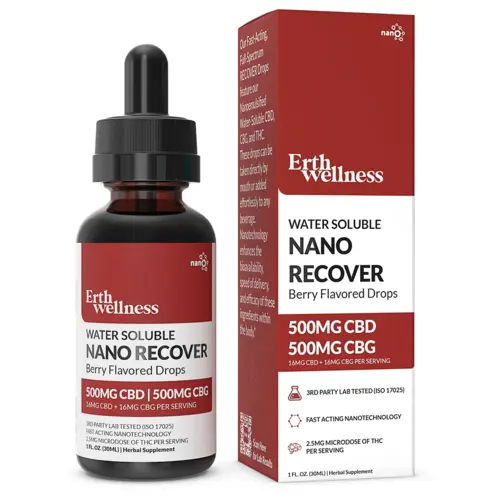
Erth Wellness Full Spectrum CBD + CBG Recover Tincture Drops
For active recovery and inflammation support, Erth Wellness' Recover Tincture pairs full-spectrum CBD with CBG in a sublingual format designed for fast absorption. Tinctures absorb sublingually within 15 to 45 minutes, which is significantly faster than gummies or capsules, making them the right format when you want to manage post-workout soreness, joint inflammation, or recovery-day discomfort. Erth's full-spectrum formulation also delivers the trace cannabinoids and terpenes that support the entourage effect, which is exactly the synergy the 2019 CBG + CBD neuroinflammation research pointed to. For athletes, gym regulars, and anyone whose routine involves real physical demand on their body, this is the combination tincture to keep on the nightstand.
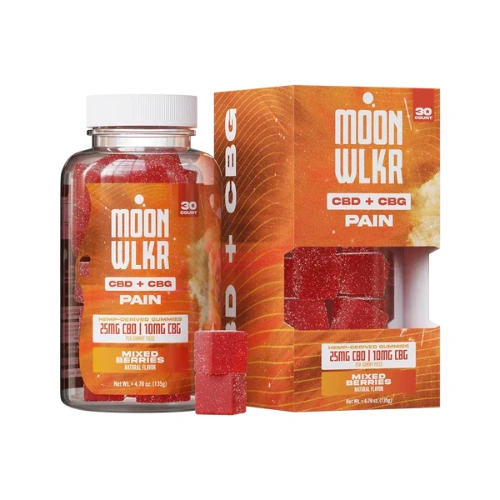
Moonwlkr CBD + CBG Pain Relief Gummies
For targeted pain support in an easy daily dose, Moonwlkr's CBD + CBG Pain Relief Gummies bring together both cannabinoids in a single, flavorful product designed specifically to ease inflammatory and musculoskeletal discomfort. Moonwlkr has earned a strong reputation among CBD enthusiasts for clean formulations, well-tested products, and reliably good flavor—three things that matter more than they sound when you're trying to maintain a daily wellness habit. If you're managing chronic joint pain, persistent inflammation, or post-exertion soreness and want something simpler than tinctures, these gummies are a great option.
Where to Buy CBG Products
The Green Dragon CBD's CBG and combination cannabinoid collection brings together CBG products from CBDistillery, Erth Wellness, Moonwlkr, and other trusted national brands in a single, vetted catalog. Every brand carried has published lab reports, transparent sourcing, and a track record we've spent time evaluating ourselves—so you don't have to do the manufacturer-by-manufacturer due diligence on your own.
When you're shopping for any CBG product, look for the same quality signals you'd apply to a CBD purchase: a current third-party Certificate of Analysis (COA) covering cannabinoid potency and contaminants, U.S.-grown hemp sourcing, clear milligrams-per-serving labeling, and a vetted brand with a transparent track record.
Need help finding an appropriate CBG product? Contact our customer service team for assistance.


CBG is the precursor cannabinoid (the "mother cannabinoid") from which CBD and THC are formed in the cannabis plant. The two interact with the endocannabinoid system through somewhat different mechanisms, with CBG binding directly (but weakly) to CB1 and CB2 receptors while CBD works mostly indirectly. Both are non-psychoactive, but they appear to have somewhat different effects in users.
Yes. Hemp-derived CBG products containing 0.3% THC or less by dry weight are federally legal in the United States under the 2018 Farm Bill. State laws vary slightly, so check local regulations if you're unsure.
No. CBG is non-intoxicating. A 2024 WSU clinical trial specifically measured intoxication ratings and found CBG produced none of the cognitive or motor impairments associated with THC.
Yes, and many people get the best results from combination products. CBG and CBD appear to work synergistically (the "entourage effect"), and most of the best-reviewed CBG products on the market today are formulated with both cannabinoids together.


