CBD Oil, Gummies, or Cream? How to Choose the CBD Format That Fits Your Routine
Walk into any CBD shop, or scroll our online store, and you'll see the same compound in very different packages. There are dropper bottles of CBD oil, jars of colorful CBD gummies, and tubes of CBD cream. They all start with hemp-derived cannabidiol, but they fit into a day in very different ways.
The right format comes down to your routine, your preferences, and how much control you want over your serving size. This guide walks through how each format works, why people choose it, and what to look for on the label. It's written for adults 21 and older who want to make an informed choice. It is not medical advice.
A Quick Refresher on CBD
CBD (cannabidiol) is one of many compounds found naturally in the hemp plant. In the body, cannabinoids like CBD interact with a network of receptors called the endocannabinoid system (ECS), which regulates functions like mood, pain perception, appetite, and immune response.
CBD interacts with two main receptor types in the ECS, known as CB1 and CB2, and appears to influence how these receptors respond to signals in the body, leading to potential wellness applications. CBD is non-intoxicating, does not produce a “high,” and is commonly used for wellness support.
It helps to know where CBD stands with regulators. The National Center for Complementary and Integrative Health (NCCIH) notes that only one CBD product, a prescription medication called Epidiolex, has been approved by the FDA. It also notes that research on other uses is still in its early stages. Over-the-counter CBD products like oils, gummies, and creams are not FDA-approved, and they are not evaluated the way prescription drugs are.
You'll also see three "spectrum" terms on labels:
- Full-spectrum: contains CBD plus other naturally occurring hemp compounds, which can include trace amounts of THC within legal limits.
- Broad-spectrum: contains CBD and other hemp compounds, with THC removed to non-detectable levels.
- Isolate: purified CBD with other plant compounds removed.
Spectrum type is a personal preference. A Certificate of Analysis (COA), which we'll cover below, is how you confirm what's actually in the bottle.
For more information on CBD, see our blog: What is CBD? Your Complete Beginner’s Guide to Cannabidiol.
CBD Oil & Tinctures: the Flexible Option
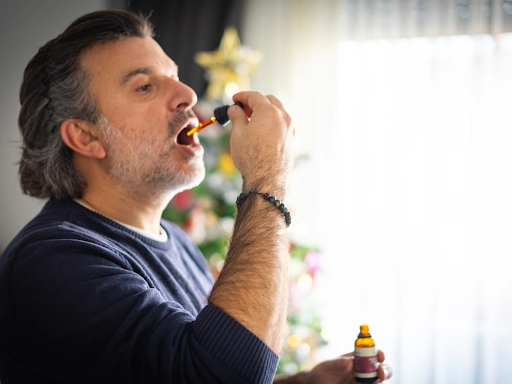
CBD oil is hemp extract blended into a carrier oil, such as MCT (coconut-derived) or hemp seed oil. It usually comes in a glass bottle with a graduated dropper. You'll often see "tincture" and "CBD oil" used interchangeably on labels.
How people use oil
Most people place drops under the tongue and hold them for 30 to 60 seconds before swallowing. Others add CBD oil to a smoothie, coffee, or salad dressing.
This under-the-tongue method is called sublingual use. In a 2018 systematic review of how CBD moves through the body, researchers found that peak blood levels after sublingual drops arrived in roughly 1.7 to 2.2 hours in the studies they reviewed. The same review notes that human data are still limited, and individual results vary.
Why people choose CBD oil
- Adjustable servings. A graduated dropper lets you measure in small steps, so you can find the amount that fits your routine.
- More mg per dollar. Oils often offer a lower cost per milligram than other formats.
- Versatile. Take it on its own or mix it into food and drinks you already enjoy.
- Few added ingredients. Many oils contain just hemp extract and a carrier oil.
Things to consider
- Some people don't love the earthy, grassy taste of hemp. Flavored oils can help.
- Measuring with a dropper takes a little practice, and it's less discreet than a gummy.
- You'll need to do a bit of math. A 30 milliliter bottle labeled 1,000 milligrams has about 33 milligrams of CBD per full 1 milliliter dropper.
CBD gummies: the grab-and-go option
CBD gummies are chewable edibles infused with a set amount of CBD per piece. They come in a wide range of flavors, milligram amounts, and spectrum types. Some also include other ingredients, such as vitamins or botanical extracts, so it's worth reading the full ingredient list.
How people use gummies
Simply chew and swallow. Because a gummy is digested like food, it typically takes longer to get going than sublingual oil. In the 2018 review mentioned above, peak blood levels after swallowing CBD ranged from about 1 to 4 hours across studies. The review also describes a small study in which taking CBD with food raised the amount measured in the blood compared with an empty stomach. That's one reason some people prefer to take gummies with a meal.
CBD gummies benefits, from a format point of view
- Pre-measured servings. Every gummy contains a labeled amount, so there's no dropper to read.
- Easy to fit into a routine. Many people keep a jar by the coffee maker or in a bag for the day.
- Discreet and portable. A gummy looks like any other snack.
- Pleasant taste. Flavoring masks the earthy hemp flavor that some people find off-putting in oils.
Things to consider
- Gummies are less flexible. Adjusting your serving often means cutting a gummy in half.
- They usually cost more per milligram than oils.
- Many contain sugar, gelatin, or common allergens. Look for vegan, sugar-free, or allergen-friendly options if that matters to you.
- Store them securely, out of reach of children and pets. Because gummies look like candy, this matters more for gummies than any other format.
CBD cream and topicals: the targeted option
Topicals are CBD products made to be applied to the skin rather than swallowed. The category includes CBD cream, lotions, balms, salves, roll-ons, and bath products. They're often blended with familiar skincare ingredients like shea butter, jojoba oil, or essential oils such as menthol, lavender, or eucalyptus.
How people use topicals
Apply a small amount to clean skin and massage it in. Many people make it part of a post-workout routine, an evening self-care ritual, or a hand and foot care habit.
Topicals work differently from oils and gummies because they aren't designed to be ingested. Research on topical CBD in people is still thin. The 2018 systematic review found no published human studies on how CBD applied to the skin is absorbed. Keep that in mind when you read bold marketing claims about creams.
Why people choose CBD cream
- Applied right where you want it. You control exactly where the product goes.
- Nothing to swallow. A good fit for people who'd rather not take CBD by mouth.
- Doubles as skincare. Many creams and balms are also simply good moisturizers.
- Easy to add to a massage or stretching routine.
Things to consider
- Patch-test first. Apply a small amount to your inner arm and wait 24 hours, especially if the product contains fragrance or essential oils.
- Don't apply to broken or irritated skin.
- Topicals are labeled by total milligrams per container. Two creams with the same jar size can have very different amounts of CBD.
Side by side: oil vs. gummies vs. cream

How to choose your format
Start with how you want CBD to fit into your day. A few quick questions can point you in the right direction:
- Do you like fine-tuning? CBD oil gives you the most control over your serving.
- Do you want zero guesswork? Gummies offer a consistent, pre-measured amount every time.
- Do you want something for your skin, not your stomach? A CBD cream or balm may be the best fit.
- Are you on a budget? Compare cost per milligram. Oils often come out ahead.
- Are you always on the move? Gummies travel easily and need no measuring.
There's no rule that says you can only pick one. Many customers use an oil or gummy as part of their daily routine and keep a topical on hand for self-care.
Read the label like a pro
Whatever format you choose, quality matters more than packaging.
Here's what to check before you buy:
- A current Certificate of Analysis (COA) from an independent, third-party lab. It should match the product's batch or lot number.
- Total CBD per container and per serving, stated in milligrams.
- Cannabinoid profile, confirming THC levels are within legal limits.
- Contaminant screening for heavy metals, pesticides, residual solvents, and microbes.
- Spectrum type (full-spectrum, broad-spectrum, or isolate).
- Full ingredient list, including carrier oils, sweeteners, and fragrances.
- Clear brand contact information and no promises to treat or cure anything. A brand making medical claims is a red flag.
At The Green Dragon CBD, we carry brands that publish their lab results, and our team is always happy to help you find and read a COA.
Using CBD responsibly
CBD isn't right for everyone, and every format deserves the same care. NCCIH notes that CBD may cause side effects such as decreased alertness, changes in mood, decreased appetite, and digestive upset. It has also been associated with liver injury and interactions with other drugs.
A few simple habits go a long way:
- Talk to your healthcare provider first if you take any medications or supplements, are pregnant or nursing, or have a health condition.
- Start with a small serving and follow the product label.
- Know how it affects you before driving or operating machinery.
- Keep all CBD products, especially gummies, away from children and pets.
- Buy from retailers who sell only to adults 21+ and who can show you lab results.
Frequently asked questions
Can I use more than one format? Many people do—for example, combining a daily oil or gummy plus a cream for self-care. If you combine ingestible formats, keep track of your total milligrams across products.
How much CBD should I take? There's no one-size-fits-all serving for CBD. Follow the product label, start small, and check with your healthcare provider, especially if you take other medications.
Could CBD affect a drug test? It's possible. Full-spectrum products can contain trace amounts of THC, and NCCIH notes that some over-the-counter CBD products may contain contaminants such as THC. If you're tested, consider a broad-spectrum or isolate product with a COA showing non-detectable THC, and know that no product can guarantee a result.
Do CBD creams get into the bloodstream? Human research on this is limited. The 2018 systematic review we referenced found no published human studies on CBD absorption through the skin.
Where to buy CBD
CBD oil offers flexibility and value. CBD gummies offer simplicity and great taste. CBD cream offers a hands-on, skin-focused way to make CBD part of your self-care. The best choice is the one that fits naturally into your routine and comes with a COA you can trust.
Explore our collection of CBD products, including CBD oil, gummies, and topicals.
Have questions? Contact customer service here. Our team is happy to walk you through the options, show you the lab results, and help you find a format that feels right for you.


CBD topicals are any type of cream, lotion, or gel that can be applied topically. Many use a CBD topical if they are experiencing muscle or joint pain, a rash, or sciatica, for example. This can be immediately applied to the affected area and absorbed through the skin which is why it is common in so many looking for relief.
Typically, CBD gummies take about 30 to 90 minutes for the effects to settle in and those effects can last between 4 and 6 hours.
Reputable sellers of CBD products will provide a certificate of analysis (COA) that shows that the product has been laboratory tested, preferably by a third party, to ensure that the CBD product you are purchasing is high quality.