CBD for PTSD
Post-traumatic stress disorder is one of the most under-treated mental health conditions in the United States. According to the U.S. Department of Veterans Affairs, about 6% of adults in the general population will experience it at some point in their lifetime. Among veterans, first responders, survivors of assault or abuse, and people who've lived through serious accidents or natural disasters, the rates climb considerably higher. And while traditional treatments, like trauma-focused therapy, SSRIs, and other prescription medications, remain the foundation of PTSD care, a growing number of people are looking at CBD as a complementary tool to help manage the daily weight of trauma symptoms.
This guide is meant to give you a clear, research-grounded picture of where the science currently stands on CBD for PTSD. We'll cover why researchers are paying attention, how CBD works in the body to influence the systems involved in trauma response, who's most likely to benefit, and the brands that offer the kind of quality and transparency this category demands. A note up front: CBD is not a replacement for evidence-based PTSD treatment. It may be most helpful when used in coordination with a qualified mental health professional.
Why CBD May Help With PTSD
PTSD is, at its core, a dysregulation of the body's fear and threat-response systems. After a traumatic event, some people's brains and nervous systems get "stuck" in a state of hypervigilance—the amygdala stays on high alert, fear memories don't extinguish properly, sleep fragments, and ordinary stimuli (a door slam, a smell, a passing car) can trigger physical responses that feel disproportionate to the present moment. Symptoms can include intrusive memories, nightmares, chronic anxiety, and negative moods and thoughts; and can have debilitating impact on relationships, health, and work.
CBD has drawn research interest specifically because it appears to interact with several of the same biological systems that go awry in PTSD—the endocannabinoid system (which plays a role in learning and emotional responses), fear-extinction circuitry, the serotonin system, and the regulation of sleep. It's not a cure, and the strongest evidence base for trauma treatment still belongs to therapies like Cognitive Processing Therapy (CPT), Prolonged Exposure (PE), and EMDR. But for people whose symptoms persist despite those treatments, or who need additional support for sleep, daytime anxiety, or hyperarousal, CBD offers a low-risk option worth understanding.
How CBD Works in the Body to Address PTSD
To understand why CBD has become a focus of PTSD research, it helps to know what's happening biologically in people with the condition.
Studies of trauma survivors have found that PTSD is associated with increased CB1 receptor availability, paired with reduced amounts of anandamide, one of the body's naturally produced cannabinoids. Anandamide, sometimes called the "bliss molecule," plays a key role in modulating fear, anxiety, and emotional memory. When anandamide levels drop, the brain's ability to extinguish fear memories falters, aversive memories consolidate more strongly, and chronic anxiety takes over. In other words: an underactive endocannabinoid system appears to be a meaningful piece of the PTSD puzzle.
This is where CBD enters the picture. CBD doesn't bind directly to CB1 receptors the way THC does. Instead, it inhibits FAAH (fatty acid amide hydrolase), the enzyme responsible for breaking down anandamide. By slowing that breakdown, CBD effectively raises anandamide levels to support the very system that PTSD seems to deplete.
PTSD can be understood as a failure by the brain to inhibit inappropriate fear responses. One common treatment strategy is to repeatedly present the fear cue without any danger, referred to as fear extinction learning. Studies suggest that CB1 receptors are critical for successful extinction of fear memories, and CBD may directly influence fear extinction. Several clinical trials are now investigating CBD as a combination therapy with Prolonged Exposure: the theory is that CBD may help the brain better integrate the corrective learning that exposure therapy is designed to produce.
Beyond the endocannabinoid system, CBD modulates serotonin signaling at the 5-HT1A receptor (the same pathway targeted by some PTSD medications), interacts with TRPV1 receptors involved in pain and threat perception, and supports GABA activity, which helps calm the nervous system. Taken together, these mechanisms explain why CBD users so often report a downstream effect of "the volume coming down" on hyperarousal, anxiety, and intrusive thoughts.
What Recent Research Tells Us
The clinical evidence base for CBD and PTSD is still emerging, but it's no longer thin.
A widely cited 2019 case series by Elms and colleagues, published in the Journal of Alternative and Complementary Medicine, followed 11 adult patients diagnosed with PTSD at an outpatient psychiatric clinic. After eight weeks of CBD use in addition to standard care, 91% of patients experienced a decrease in PTSD symptom severity. An unexpected result worth noting: 50% of patients who had been experiencing severe nightmares reported improvement in those nightmares. PTSD-related sleep disturbance tends to be treatment-resistant, so this is a significant finding.
Other research worth knowing: a 2018 review in Frontiers in Neuroscience synthesized preclinical and clinical evidence and concluded that CBD may offer benefits for disorders like PTSD that are related to disproportionate emotional responses and traumatic memories. And the World Health Organization's 2018 critical review of CBD found it has a good safety profile, no public health risk associated with abuse or dependence, and is well-tolerated even at high doses—an important data point given that many PTSD patients are wary of medications with sedation, dependency, or withdrawal concerns.
This is still early science, and most researchers agree that longer human trials are needed to understand optimal dosing and identify which symptom clusters respond best. But the direction of the evidence is consistent and encouraging.
Who Might Benefit From Using CBD for PTSD
CBD is not the right fit for everyone, and it's not a substitute for therapy. That said, certain groups tend to find it especially useful as part of a broader recovery toolkit.
Veterans and first responders are among the most studied populations in CBD-for-PTSD research, in part because rates of PTSD in these groups are dramatically higher than in the general population, and in part because many veterans are actively looking for non-opioid, non-benzodiazepine options for managing symptoms.
Survivors of assault, abuse, or childhood trauma may benefit from CBD's effects on hyperarousal, intrusive thoughts, and sleep disturbance, particularly when symptoms persist despite ongoing therapy.
People struggling with PTSD-related insomnia and nightmares are another group with a lot to gain. The Elms case series finding on nightmare improvement, paired with broader research on CBD and sleep, suggests that nighttime symptoms may be a particularly responsive target.
People with generalized anxiety alongside PTSD, or those experiencing emotional dysregulation throughout the day, often report that CBD takes the edge off the underlying baseline of stress that makes everything else more difficult to manage.
A few important cautions: CBD can interact with prescription medications metabolized by CYP450 liver enzymes, which includes some SSRIs, benzodiazepines, and antiseizure medications commonly prescribed for PTSD. If you're on any prescription medication, talk to your prescriber before adding CBD. CBD is also not recommended as a standalone treatment for active suicidal ideation, severe dissociation, or acute crisis—those require immediate clinical care.
Three Brands We Recommend for CBD and PTSD Support
PTSD symptoms can make daily routines harder to maintain, so quality and consistency are key when choosing a CBD product. Here are three brands we trust:
Medterra
Medterra has built its reputation on clean, consistent, U.S. Hemp Authority–certified products and a science-forward approach. Their Sleep Tight gummies combine 25 mg of CBD isolate each with natural, sleep-enhancing ingredients like chamomile, passionflower, lemon balm, and l-theanine—a thoughtful combination for addressing the PTSD-related sleep disruption and nightmare issues many people struggle with.
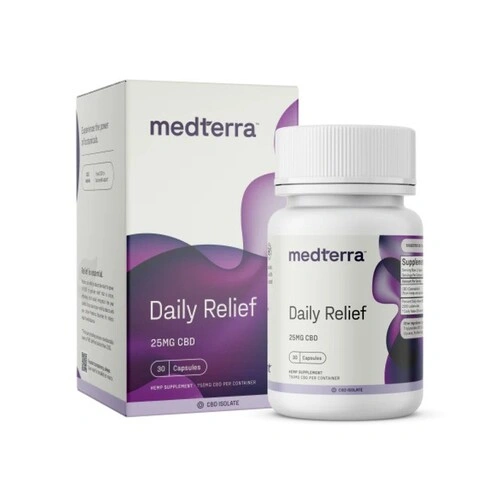
For those looking for zero THC, Medterra Daily Relief CBD Isolate capsules are great for overall wellness in a flavorless, precisely dosed, easy-to-take format.
cbdMD
cbdMD is one of the largest broad-spectrum CBD producers in the U.S., and broad-spectrum may be the right form factor for a lot of PTSD users—you get the entourage effect of multiple cannabinoids and terpenes without any THC. Their broad-spectrum CBD tincture is great for daily use, with multiple strengths to choose from, while their PM sleep oil tincture combines CBD with melatonin, valerian root, and chamomile for nighttime support. cbdMD is U.S. Hemp Authority–certified, sources from American-grown hemp, publishes batch-level COAs, and offers potencies ranging from 300 mg up to 7,500 mg per bottle, so you can dial in the right dose without having to switch brands as your needs evolve.
Charlotte's Web
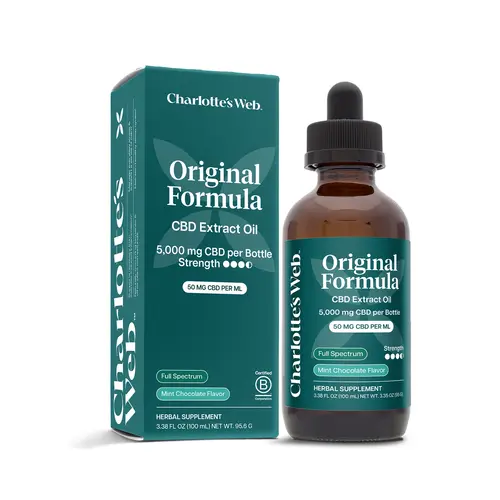
Charlotte's Web is the longest-tenured, perhaps most trusted name in the category, and their product lineup is particularly well-suited to PTSD support. Their Original Formula CBD Oil is a leader in the category, formulated with full spectrum hemp to support mind and body wellness; while their Stay Asleep CBN Gummies Calm Gummies deliver sleep-supporting CBN, which may relieve some of the persistent sleep disruption common in PTSD—with no melatonin.
Charlotte's Web carries U.S. Hemp Authority certification, uses ISO-accredited testing, and publishes COAs for every batch. For users who prefer full-spectrum products and want the entourage effect, and who don't have drug-testing concerns, Charlotte's Web is the brand we recommend most often.
Getting Started
If you're considering CBD as part of your PTSD recovery toolkit, a few practical guidelines are worth keeping in mind.
Start with your treatment team. CBD works best as a complement to evidence-based therapy and (if prescribed) medication—not as a replacement. Loop in your therapist and prescriber before you start.
Match the format to the symptom. For daytime anxiety and hyperarousal, a broad-spectrum tincture or calming gummy from Medterra or cbdMD is a sensible starting point. For sleep disturbance and nightmares, products specifically formulated with CBN, like Charlotte’s Web’s Stay Asleep Gummies, tend to work better than CBD alone.
Start low and go slow. A common starting range is 20 to 40 mg of CBD per day, adjusted upward over one to two weeks. Many people managing PTSD symptoms eventually settle in the 50 to 100+ mg/day range, often split into morning and evening doses. CBD typically works by building a steady baseline rather than producing a single dramatic effect, so give any new product at least two weeks before judging it.
Track what you're noticing. PTSD symptoms can be subtle to track day-to-day. Keeping a brief daily log of sleep quality, intrusive symptoms, and overall stress level helps you see whether something is actually working, and gives your treatment team useful data.
Find CBD Products at The Green Dragon CBD
For a curated selection of CBD products that meet quality, transparency, and third-party testing standards, The Green Dragon's CBD collection brings trusted brands into one vetted catalog, so you don't have to evaluate manufacturers on your own.
CBD won't undo trauma, and no responsible source would suggest otherwise. But for a meaningful number of people living with PTSD, it has earned a place in the toolkit, quietly turning down the volume on PTSD symptoms, supporting better sleep, and creating a little more space for the overall work of recovery to make progress.


CBD is not an FDA-approved treatment for PTSD. The strongest evidence base for PTSD treatment still belongs to trauma-focused therapies like Cognitive Processing Therapy (CPT), Prolonged Exposure (PE), and EMDR, often paired with prescription medication. CBD is best understood as a potential adjunct—a tool that may help manage daily symptoms (anxiety, sleep disturbance, hyperarousal) while you do the deeper work of trauma recovery with a qualified therapist.
It can. CBD is metabolized by the same liver enzymes (CYP450) that process many SSRIs, benzodiazepines, and antiseizure medications commonly used in PTSD treatment. The interaction can either raise or lower drug levels in your system. Always check with your prescriber before adding CBD if you're on prescription medication.
For most PTSD users, broad-spectrum may be the best starting point: you get the entourage effect of multiple cannabinoids and terpenes without any THC. Full-spectrum is a strong choice if you don't have drug-testing concerns and respond well to small amounts of THC. Isolate works for people who are highly sensitive to other cannabinoids or who want absolute precision in their dose.
Possibly. The 2019 Elms case series found that 50% of patients with severe nightmares reported subjective improvement after eight weeks on CBD.